10 Things You Likely Didn't Know About Ireland
A Belfast-built ship, a saint who wasn't Irish, a brewery that made the state turn its harp around. Ten true stories that change how you see the island.
Last checked October 2026
Ireland is a small island that has spent several thousand years quietly arranging to surprise people. It built the most famous ship in the world, exported a festival now celebrated on every continent, and produced the man who wrote Dracula. Most visitors arrive knowing almost none of it.
Here are ten true things about Ireland that tend to stop people mid-sentence. None of them needs exaggerating. The facts do the work on their own.
1. The Titanic was built in Belfast, and said her last goodbye in Cobh
The most famous ship ever launched was designed and built on Queen's Island in Belfast by Harland & Wolff. Her keel was laid in 1909 and she slid into Belfast Lough on 31 May 1911, in front of a crowd of around 100,000 people. You can still stand on her slipway: the Titanic Belfast museum now sits at the head of it.
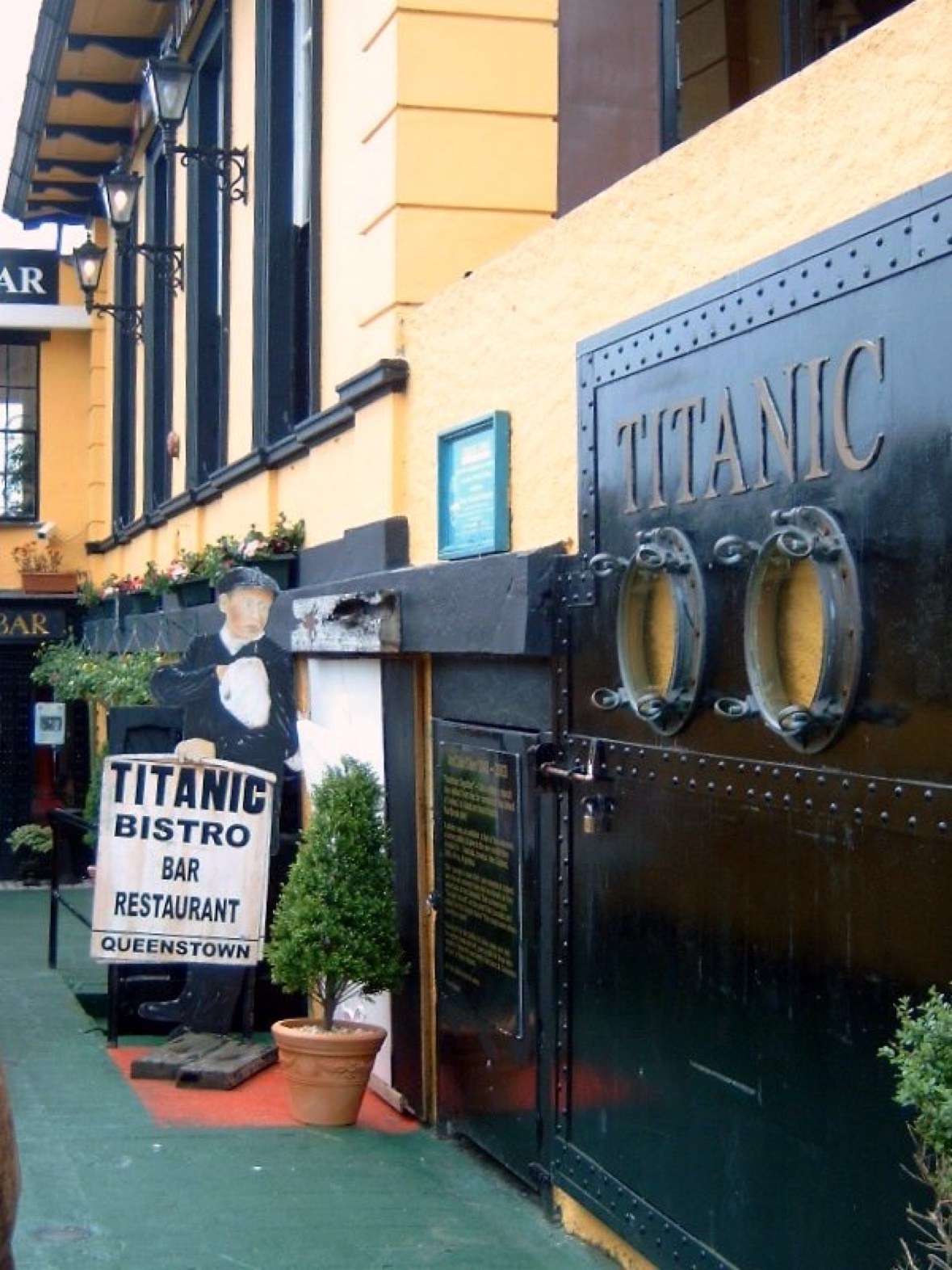
What fewer people know is where the maiden voyage truly ended. On 11 April 1912, Titanic anchored off Queenstown, now Cobh, in County Cork, her final port of call. Tenders ferried out 123 last passengers, most of them third-class emigrants beginning new lives in America, along with 1,385 bags of mail. Seven people got off, among them a young seminarian, Father Frank Browne, whose photographs remain the finest record of life on the ship. Cobh has never forgotten the 123: the Titanic Experience there hands every visitor a boarding pass bearing one of their names.
2. Newgrange is older than the pyramids
In a bend of the River Boyne in County Meath stands a great grass-covered mound, built around 3200 BC by a farming people with no metal tools. That makes Newgrange older than Stonehenge and roughly six centuries older than the Great Pyramid of Giza.
Age is only half of it. Above the entrance sits a small opening, the roof-box, precisely placed so that on the mornings around the winter solstice, the rising sun sends a shaft of light down the 19-metre passage and into the chamber at the mound's heart. It lasts about seventeen minutes, and it has worked for five thousand years. The corbelled stone roof above that chamber has never leaked. Places inside for the solstice itself are allocated by lottery each year; everyone else visits by guided tour from the Brú na Bóinne visitor centre.
3. St Patrick wasn't Irish
Ireland's patron saint was a foreigner, and an unwilling arrival at that. By his own account in his Confessio, Patrick was born in Roman Britain in the late fourth century, the son of a deacon. At sixteen he was seized by Irish raiders, carried across the sea, and sold as a slave, spending six years herding sheep in the hills. Tradition places him on Slemish Mountain in County Antrim.
He escaped, got home to Britain, and then did the extraordinary thing: he went back, returning years later as a missionary, to spend the rest of his life there. He wasn't even the first missionary sent. A bishop named Palladius had been dispatched in 431. But it is Patrick the island adopted, and Patrick who, by the end of his life, had adopted the island right back.
4. There really are no snakes in Ireland, and Patrick didn't banish them
This one is true: Ireland has no native snakes, and never has. Nigel Monaghan, keeper of natural history at the National Museum of Ireland, has searched the fossil record and found no evidence that a snake ever lived on the island. There was, as he puts it, nothing for St Patrick to banish.
The real culprit is the Ice Age. Ireland was too cold for reptiles until the ice retreated around 10,000 years ago, and by the time the climate warmed, rising seas had cut the island off. Britain stayed connected to mainland Europe longer, which is how the adder and the grass snake got there; slow-moving snakes simply missed the crossing. Scholars generally read the famous legend as an allegory, the "snakes" standing for the old pagan ways Patrick's mission displaced. Ireland's entire native reptile population, incidentally, is a single species: the common lizard.
5. Halloween is Irish, and the first jack-o'-lanterns were turnips
Halloween began as Samhain (pronounced "sow-in"), the Celtic festival that marked the end of the harvest and the beginning of winter's dark half. On the night of 31 October, the boundary between the living and the dead was thought to grow thin. People lit bonfires, wore disguises so wandering spirits wouldn't recognise them, and left food out to keep the night's visitors friendly: the deep roots of both costumes and trick-or-treating.
The lanterns were carved not from pumpkins but from turnips and beet, hollowed out and set with an ember, partly in memory of Stingy Jack, the folktale trickster condemned to wander the dark with his light in a turnip. The National Museum of Ireland's Country Life museum, in County Mayo, holds an example from around 1900, nicknamed the "ghost turnip." When Irish emigrants carried Samhain to America in the nineteenth century, they found pumpkins, bigger, softer and far easier to carve, and the turnip quietly retired.
6. Dracula was written by a Dubliner
Count Dracula is Transylvanian. His creator was from Clontarf. Bram Stoker was born at 15 Marino Crescent on Dublin's northside in 1847, spent his first seven years bedridden with an undiagnosed illness, then confounding everyone by becoming a champion athlete at Trinity College Dublin.
Stoker spent his working life in the theatre, as business manager to the great actor Henry Irving at London's Lyceum, writing fiction on the side. Dracula, published in 1897 and written as a bundle of letters, diaries and newspaper cuttings, fixed the rules of the vampire story so completely that we still use them today. A short walk from his birthplace, in Clontarf, a park now carries his name, a modest honour for the man who gave the world its most famous monster.
7. Ireland's emblem is a harp, and Guinness made the state turn it around
Look at an Irish passport, an Irish euro coin, or the seal of the President, and you'll find a harp: Ireland is often described as the only country in the world whose national emblem is a musical instrument. The design is modelled on a medieval harp, the so-called Brian Boru harp, which you can see today in the Long Room of Trinity College Dublin's Old Library.
Guinness, though, adopted the same harp first, using it from 1862 and registering it as a trademark in 1876. When the new Irish Free State wanted the harp as its emblem in 1922, the brewery's trademark stood in the way, so the state simply flipped the instrument. On official emblems, the harp's straight soundboard sits on the right; on every Guinness label, it sits on the left. Two harps, mirror images, and between them they cover most of Irish life.
8. A schoolteacher from County Clare gave the world the modern submarine
John Philip Holland was born in Liscannor, on the Clare coast, in 1841, and trained as a schoolteacher. He emigrated to America in 1873 with his submarine designs in his luggage and an unlikely set of backers: his first experimental boats were financed by the Fenian Brotherhood, Irish nationalists who dreamed of a weapon against the Royal Navy. One of them, the Fenian Ram of 1881, still survives today.
The design Holland perfected, a petrol engine for travelling on the surface, electric motors below it, and ballast tanks to dive and rise, became the template for every submarine fleet that followed. In April 1900 the United States Navy bought his Holland VI for $150,000 and commissioned her that October as USS Holland, its first formally commissioned submarine. The Royal Navy's first boat, launched the following year, was built to a Holland design too. The teacher from Liscannor had armed both sides of the Atlantic.
9. The first St Patrick's Day parade was held in Florida, in 1601
Not Dublin, not Boston, not New York. The first recorded St Patrick's Day parade took place in St Augustine, Florida, on 17 March 1601, when the town was a Spanish colony. Its parish priest was an Irishman, Ricardo Artur (Richard Arthur), and under him the townspeople processed through the streets in honour of San Patricio, with the fort's cannons firing in salute.
The record slept in Spanish colonial archives for four centuries (it surfaced in the colony's gunpowder accounts) until historian J. Michael Francis of the University of South Florida identified it in research published in 2017. Boston's first St Patrick's Day observance came in 1737 and New York's parade in 1762, both remarkable, both more than 130 years too late for the title. In Ireland itself, 17 March remained a quiet religious feast day for centuries; the parade was an emigrant invention that the homeland eventually imported back.
10. The Irish flag is a peace agreement in cloth
Every colour of the tricolour is an argument for getting along. The green stands for Ireland's Gaelic and Catholic tradition; the orange for the Protestant tradition that looks back to William of Orange; and the white between them stands for the peace that is supposed to join the two.
The flag was given its meaning by Thomas Francis Meagher, who first flew it in his native Waterford on 7 March 1848, then presented a silk tricolour in Dublin that April with words worth remembering: "The white in the centre signifies a lasting truce between the 'Orange' and the 'Green', and I trust that beneath its folds the hands of the Irish Protestant and the Irish Catholic may be clasped in generous and heroic brotherhood." It would be another three generations before the flag became the national banner. It flew over the GPO in Dublin during the Easter Rising of 1916, but the intention was stitched into it from the first day.
A small island with a long shadow
Ten stories, and they keep pointing the same way: outwards. The ship sailed from Cobh. The parade marched in Florida. The submarine crossed the Atlantic in a schoolteacher's luggage. Ireland's Department of Foreign Affairs commonly puts the number of people worldwide who are Irish-born or of Irish descent at around 70 million. For an island of a few million, that is a remarkable reach.
If your own name is part of that story, two places on this site were built for you. Our Irish surnames map shows where 795 Irish surnames were rooted in 1890, county by county, and Coming Home is our guide to the heritage trip itself: finding the townland, the parish, and the people.
See these stories on the ground:
- Cobh, County Cork: Titanic's last port of call, and the pier the 123 sailed from
- Titanic Belfast, County Antrim: the museum on the slipway where she was built
- Newgrange, County Meath: 5,000 years old and still keeping time
- Trinity College Dublin: the medieval harp in the Long Room of the Old Library
- Land of Saints and Scholars: St Patrick and Ireland's early saints
- The Irish surnames map: where your name was rooted in 1890
- Coming Home: planning the heritage trip itself
Questions, answered
Was the Titanic really built in Ireland?
Yes. Titanic was designed and built by Harland & Wolff at Queen's Island, Belfast: keel laid in 1909, launched on 31 May 1911. Her last port of call before the Atlantic crossing was Queenstown, now Cobh in County Cork, on 11 April 1912, where 123 passengers boarded.
Are there really no snakes in Ireland?
Really. There are no native snakes, and fossil evidence suggests there never have been. After the last Ice Age, rising seas cut Ireland off before snakes, which colonise new ground slowly, could reach it. The story of St Patrick banishing them is a later legend, usually read as an allegory for the coming of Christianity.
Which way does the harp face on a Guinness label, and why is the state harp different?
Guinness registered its harp as a trademark in 1876, with the harp's straight soundboard on the left. When the Irish Free State chose the same medieval harp as the state emblem in 1922, it had to mirror the design to avoid the trademark, so on passports and coins the soundboard sits on the right.
Where was the first St Patrick's Day parade?
In St Augustine, Florida, in 1601, then a Spanish colony whose Irish parish priest, Ricardo Artur, organised a procession for San Patricio. The record was identified in Spanish colonial archives by historian J. Michael Francis in 2017. New York's famous parade began in 1762. ---