Sean's Bar: A Pint in Ireland's Oldest Pub
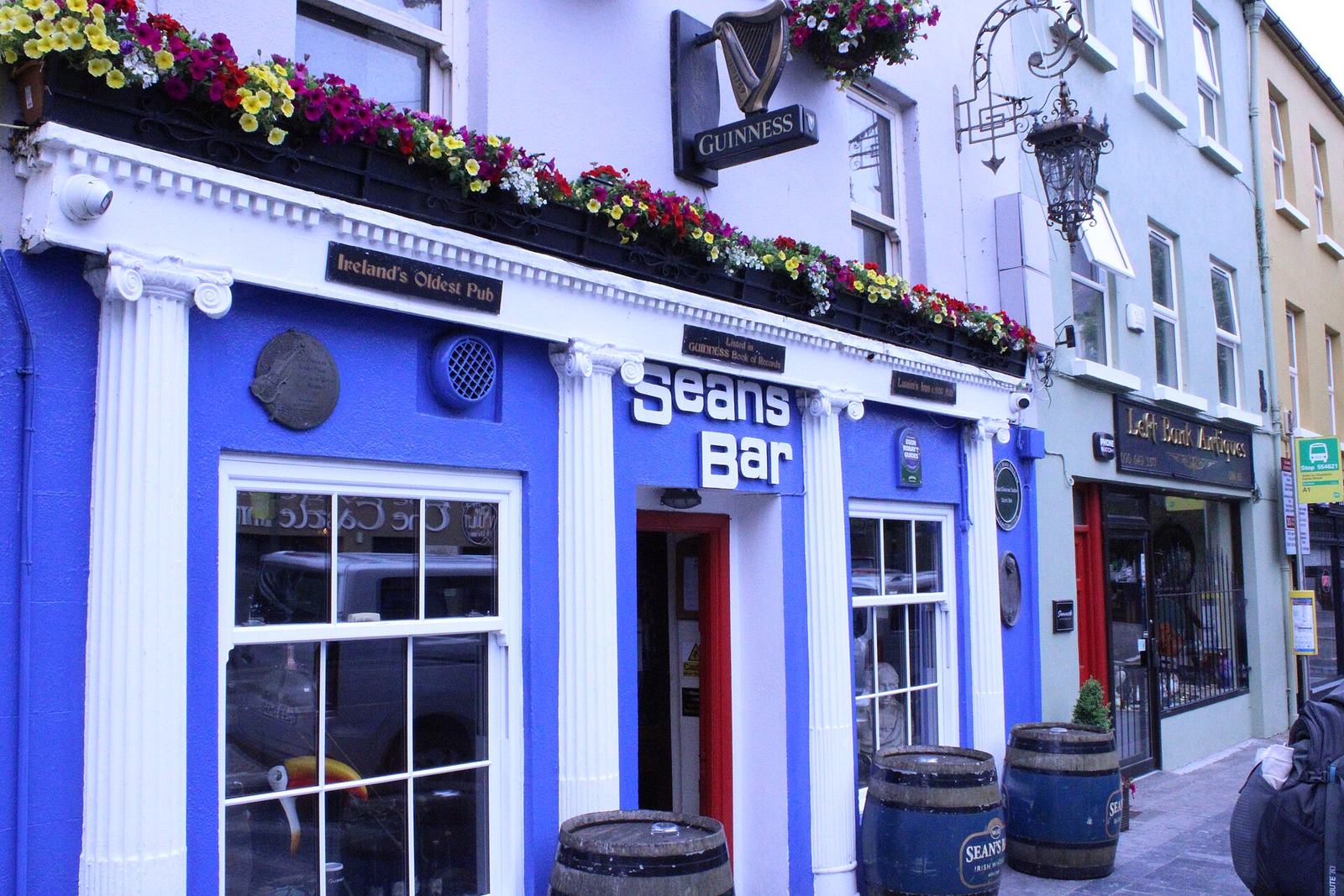
Sawdust on the floor, a turf fire lit since mid-morning and a Guinness World Records certificate behind the bar. Sean's Bar in Athlone traces its story to about 900 AD. Here is how that claim holds up, and what the place is like to drink in now.
Last checked October 2026
There is sawdust on the floor, a turf fire going since mid-morning, and a framed Guinness World Records certificate behind the bar. The ceiling is low, the floor slopes a little under your feet, and the first pints of the day are pulled at half ten in the morning. This is Sean's Bar on Main Street in Athlone, and if the dating is right, people have been drinking on this spot for more than 1,100 years.
To put that in perspective, look out the door. The castle across the bridge is a solid Norman keep that has guarded the Shannon crossing for eight centuries, and it looks permanent enough. On Sean's timeline, the castle is the new development.
Plenty of pubs claim great age and leave it there. Sean's had archaeologists involved, and research verified by the National Museum of Ireland. That is a serious level of paperwork for a bar.
It starts with a man named Luain
The pub's own history, kept by the owners and told to anyone who asks at the bar, begins about 900 AD with Luain Mac Luighdeach. Luain kept an inn beside a shallow ford on the River Shannon, the safest crossing point for miles around, and guided travellers through the water. An inn at a busy ford was good business then, and the settlement that grew up around it took his name: Áth Luain, the ford of Luain. Say it a few times and you can hear it soften into Athlone.
Kings and clan chiefs are said to have lodged at the inn in the centuries that followed. That part belongs to the telling rather than the records, and the bar is easy about the difference. What is solid is the geography: the ford made the town, and the pub still stands a short walk from the bridge on the west bank.
The wall in the wall
For most of its life, nobody on the premises knew how old the place really was. The answer turned up in the 1970s. Sean Fitzsimons had taken over the pub in 1970 and given it his name, and when renovations began, the builders found older building work behind a back wall: wattle and wicker, panels of interwoven hazel sticks bound with horsehair and clay, the way walls were built in early medieval Ireland.
Old coins and tavern tokens turned up in the works as well. The tokens are now on display in the National Museum of Ireland in Dublin, and a section of the wattle wall is preserved in the bar itself, beside the fireplace, where you can study it over a pint. The research that followed dated activity on the site back to about 900 AD.
Fairness requires a footnote, and this bar can take one. The official architectural surveys date the present building to around 1725, while allowing that it may hold the fabric of earlier buildings inside it. So the house you drink in is a few centuries old, standing on a drinking spot that may be three times that age. The regulars have heard the footnote many times. They are still ordering.
The certificate, and the rivals
In 2004, Guinness World Records issued Sean's Bar its certificate as the oldest pub in Ireland. The wording matters. It does not say the oldest pub in the world, because no record body can prove a negative like that. The owners, the regulars and a good number of Irish historians believe it is the world's oldest as well, on the simple ground that nobody, anywhere, has produced an older one.
The rivals keep the argument lively. The Bingley Arms in Leeds dates its story to 953, which makes it a serious contender in England. Dublin's Brazen Head, down by the Liffey, goes back to 1198 and argues its own corner with conviction. Sean's still has nearly three centuries on the Brazen Head, and it has the certificate framed. In pub arguments, as in most arguments, paperwork helps.
What it is like now
The relief, after all that history, is that the place has not been turned into a museum with a bar attached. It is a working local first. Sawdust goes down fresh, the turf fire is lit in the morning, and the walls carry the accumulated stuff of a long life: photographs, maps, old letters and nautical bits and pieces. Visitors come through in the afternoons, and the staff have the story down to a well-paced few minutes if you ask them.
There is live traditional music every night. The pub also pours its own whiskey, a blend of grain and malt matured in bourbon casks, and runs bookable sessions on top of the ordinary drinking: whiskey tastings, Irish coffee, and a masterclass in pouring the perfect pint, which turns out to be harder than it looks and is graded accordingly.
The pattern most people settle into: mid-afternoon on a weekday for the history and a proper chat, and the evening for the music, when the place fills and the craic takes over. Both are the real pub. The afternoon version is simply easier to hear.
If you go
- Address: 13 Main Street, Athlone, County Westmeath, on the west bank of the Shannon and a few minutes' walk from Athlone Castle.
- Opening hours: Monday to Thursday 10.30am to 11.30pm, Friday and Saturday 10.30am to 12.30am, Sunday 12.30pm to 11pm. The bar's own site, seansbar.ie, carries the current hours.
- Getting there: Athlone sits on the M6 roughly halfway between Dublin and Galway, about 1 hour 20 minutes by road from Dublin and just over an hour from Galway. Trains between Dublin and Galway stop at Athlone station.
- Athlone Castle: the visitor centre is closed for redevelopment at the time of writing, with reopening expected in autumn 2026, so check before building a day around it. The castle walls, the bridge and the river walks carry on regardless.
- While you are in town: boats run trips on the Shannon from the quay by the castle in season, up towards Lough Ree or downriver to Clonmacnoise.
- Athlone: the town that grew up around Luain's ford
- County Westmeath: the geographical middle of Ireland
- Irish pubs and music: what happens when a session starts
Questions, answered
Is Sean's Bar really the oldest pub in Ireland?
Guinness World Records certified Sean's Bar as the oldest pub in Ireland in 2004, following research verified by the National Museum of Ireland that dated the site to about 900 AD. Architectural surveys date the present building to around 1725, possibly reusing earlier fabric, which is the honest footnote to the claim.
How old is Sean's Bar?
The site's history is traced to about 900 AD, when Luain Mac Luighdeach is said to have kept an inn at the ford of the Shannon, which makes the drinking spot more than 1,100 years old. The building standing today is a few centuries old.
Where is Sean's Bar?
At 13 Main Street in Athlone, County Westmeath, on the west bank of the River Shannon, a few minutes' walk from Athlone Castle. Athlone is on the M6 between Dublin and Galway.
Can you still see the old wattle wall?
Yes. A section of the wattle and wicker wall found during renovations in the 1970s is preserved in the bar, beside the fireplace. The tavern tokens found at the same time are on display in the National Museum of Ireland in Dublin.