Carlow
A working county town with a castle guarding the river crossing and a Neolithic dolmen in a field just east of it. Carlow stands on the River Barrow.
Best sites to see in Carlow
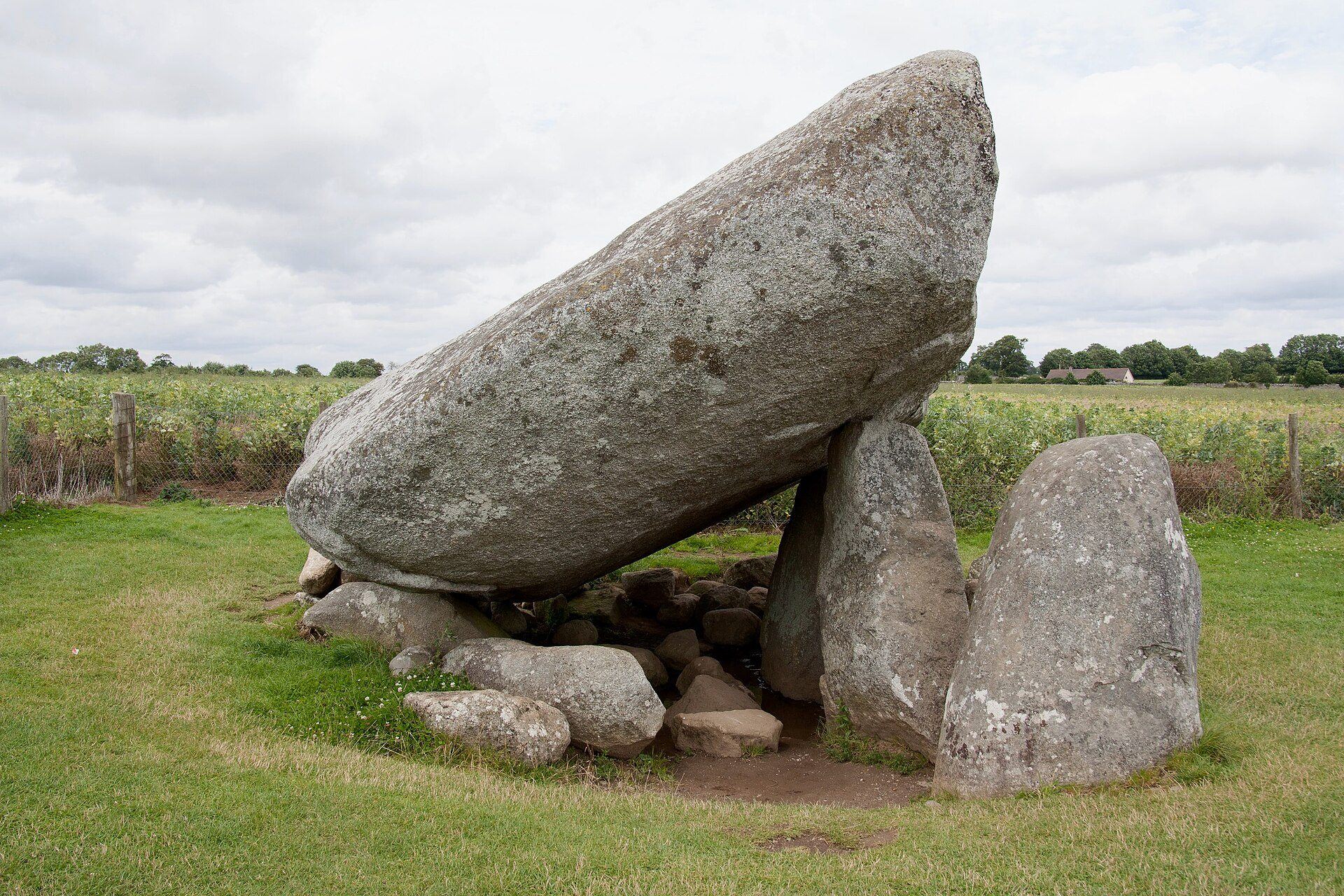
Brownshill Dolmen
A Neolithic portal tomb just east of the town, famous for its very large granite capstone, set in a small field with a short path from the road.
Carlow Castle
The surviving ruins of an early 13th-century castle beside the River Barrow, once a strong Norman stronghold guarding the river crossing.
Carlow County Museum
A town-centre museum in a former convent building, covering the county's history from prehistoric finds to its industrial and social past.
Carlow Cathedral of the Assumption
The early 19th-century Catholic cathedral in the town centre, associated with Bishop James Doyle and noted for its stained glass and ornate tower.
Where to stand, and when
- Brownshill Dolmen: Late afternoon gives warm side light on the capstone; include the surrounding field to show its scale.
- The River Barrow towpath in town: Morning is best for calm water and reflections near the castle and the bridges.
- Carlow Castle from across the Barrow: Photograph from the far bank for the clearest view of the surviving towers above the river.
Carlow through history
Carlow stands on the River Barrow, a historic border and trading route, and its castle was built in the early 13th century in the Norman period.
Fighting took place in Carlow town during the rebellion of 1798.
A sugar beet factory opened at Carlow in 1926, an important early industry of the Irish Free State that operated for much of the 20th century.
The Brownshill Dolmen outside the town dates to the Neolithic period and is among the best-known prehistoric monuments in the south-east.
Practical tips
- The Brownshill Dolmen has only a small parking area, so visit outside peak times and take care on the adjoining road.
- The Barrow Way towpath through town is flat and well suited to a short riverside walk or cycle.
- Most town-centre sights are within a short walk of each other, so park once and go on foot.
What's on
No anchor festival is based here, but the Irish year is full: next up nationally is TradFest (20–24 Jan 2027, Temple Bar, Dublin). See the full events calendar